

Indigenous Correspondents Program
- Home
- Foundational Projects
- Indigenous Correspondents Program


Our Mission
The Ilíiaitchik: Indigenous Correspondents Program (ICP) empowers Indigenous student storytellers to share their voices, traditions, knowledge, and environmental solutions with the world. We accomplish this through a year-long story mentorship, communication skill-building, and community-building program led by Indigenous mentors in fields ranging from environmental journalism and science to photography and filmmaking. The program aims to support greater participation and leadership by Indigenous students in environmental communication fields and to center Native perspectives, ingenuity, and solutions in addressing environmental issues.
Our Vision
ICP envisions a future where Indigenous perspectives and solutions are celebrated nationwide, drive meaningful change, and strengthen community resilience.
We amplify Indigenous perspectives and foster a future where students’ stories lead the way in
shaping a more just, sustainable world.
Applications open annually ~ May – June (check back here!)
The Team
JoRee LaFrance (Apsáalooke/Crow Nation): Co-Founder, University of Arizona Program Manager
Ivey Camille Manybeads (Diné): Indigenous Editor/Story Mentor
Trinity Norris (Denisse Ortega-Lorona(Tohono O’odham): Communications Coordinator, Indigenous Resilience Center
Torran Anderson: Community Outreach Manager, Indigenous Resilience Center
Annual Program Schedule
- August: Workshop 1: Healing through Storytelling, Editor check-ins, Story sharing night
- September: Workshop 2: Crafting a Compelling Story & Pitching, Story check-ins
- October: Workshop 3: The Art of the Interview, Peer Review/ Story Feedback Session
#1, Editor check-ins - November: Workshop 4: Multimedia Storytelling, Peer Review/ Story Feedback Session
#2, Editor check-ins - December: Workshop 5: Storytelling Through Songs and Sound, Peer Review/ Story
Feedback Session #3, Editor Check-ins - January: Workshop 6: Indigenous Knowledge and Science Communication, Peer Review/
Story Feedback Session #4, Editor Check-ins - February: Workshop 7: Indigenous & Community-based Journalism, Peer Review/ Story
Feedback Session #5, Editor Check-ins, StoryFest submission - March: Workshop 8: Sharing Your Story – Designing a Personal Webpage, Peer Review/
Story Feedback Session #6, Editor Check-ins, Non-Storyfest submission - April: Story Sharing Night & Planet Forward Summit Trip (Washington, DC)
- May: Applications open
- June: Applicants selected
- August: Workshop 1: Healing through Storytelling, Editor check-ins, Story sharing night
Notable Achievements
- Now entering the program’s 5 th year, nearly 40 students from 28 Tribal Nations have
graduated from the program - ICP Correspondents have published over 26 environmental stories –highlighting topics
ranging from the weaving Traditional Ecological Knowledge (TEK) and Western Science,
to embracing cultural burning as a means of climate resilient land management - 27 students have received full funding to travel to and attend the annual Planet Forward
Summit in Washington, DC to share their storytelling work, network with leading
environmental advocates, scientists, and storytellers, and participate in expert-led
workshops - 6 students have embarked on fully funded storytelling trips to locations across the US
and across the globe, including Dearborn, Michigan, Biosphere 2 in Oracle, Arizona, and
to the United Nations World Food Forum (WFF) in Rome, Italy - Out of several hundred story entries from 60 schools
- Now entering the program’s 5 th year, nearly 40 students from 28 Tribal Nations have
- JoRee LaFrance
- Raylen Bark
- Shondiin Mayo
- Abby Burgess
- Nizhoni Tallas
- Kimberlee Blevins
- Mickki Garrity
- Darrien Benally
- Sagen Lily Quale
- Angel Stickman
- Karli Moore
- Joshua Massey
- Tommey Jodie
- Tru West
- Avery Tilley
- Out of several hundred story submissions, and only twenty-eight spots, 4 ICP students
have won all-expenses-paid environmental storytelling trips with National
Geographic/Lindblad Expeditions to either the Galápagos Islands or Greenland,
including:- “Making Home: A story of beaver and babies,” by: Mickki Garrity (Citizen
Potawatomi Nation) Best Written Story by a Non- Media Student - “Seeding stories: Manoomin and Anishinaabeg relations” by: Sagen Lily Quale
(Red Cliff Band of Lake Superior Ojibwe) – Fan Favorite Award - “A Native farmer growing a native crop: The role of fiber hemp in a more
sustainable future” by: Karli Moore (Lumbee Tribe) – Solutions Spotlight Award - “The Present Tense of a Cornfield” by: Tommey Jodie (Navajo Nation) – Best
Multimedia Story
- “Making Home: A story of beaver and babies,” by: Mickki Garrity (Citizen

Above: ICP Support Team and Correspondents meet with Heidi Todacheene (Navajo Nation; Senior Advisor to the US Secretary of the Interior), Tracy Canard Goodluck (Navajo Nation; Senior Advisor to the Assistant Secretary for Indian Affairs), and Anne Marie Bledsoe Downes (Winnebago Tribe; Principal Deputy Solicitor for Indian Affairs) in Washington, DC to learn about environmental policy and communication efforts across Indian Country.
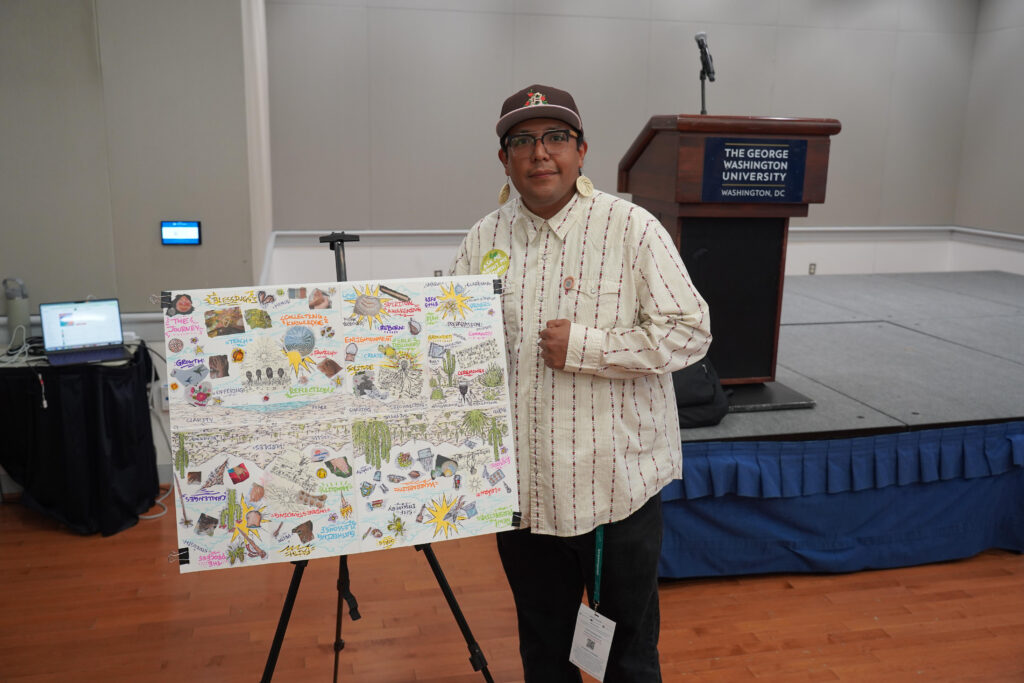
Above: ICP Correspondent Derrick Gonzalez (Tohono O’odham, Pascua Yaqui, and Piipaash) shares his zine reflecting on the salt run at the 2026 Planet Forward Summit.
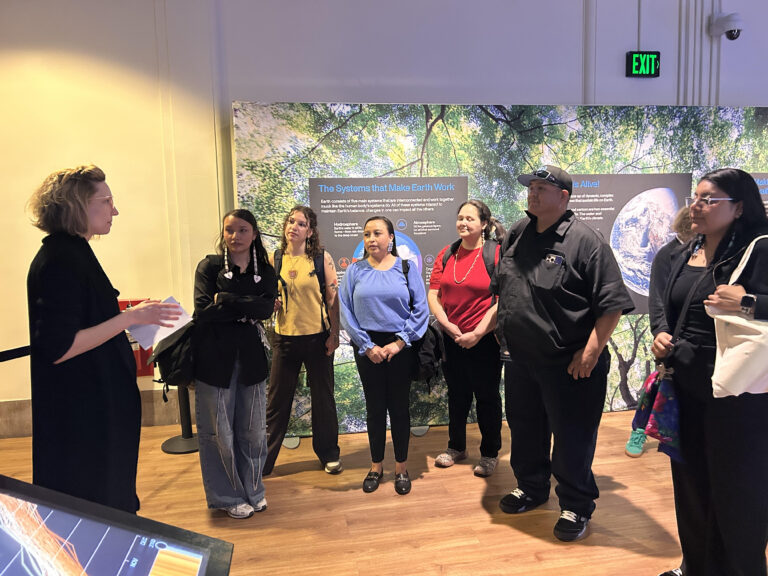
Above: ICP Correspondents learned about environmental communication efforts through writing, visuals, and exhibit design during a behind-the-scenes tour of the NASA’s Earth Information Center at the Smithsonian National Museum of Natural History during the 2025 DC Trip.

Above: ICP Story Editor/ Mentor Ivey Camille Manybeads (Diné; pictured far left) speaks with ICP Correspondents (from left to right) Mickki Garrity (Citizen Potawatomi Nation), Nizhoni Tallas (Diné), and Abigail Burgess (Mi’kmaq First Nations) about community-centered storytelling during the 2024 Planet Forward Summit at George Washington University.
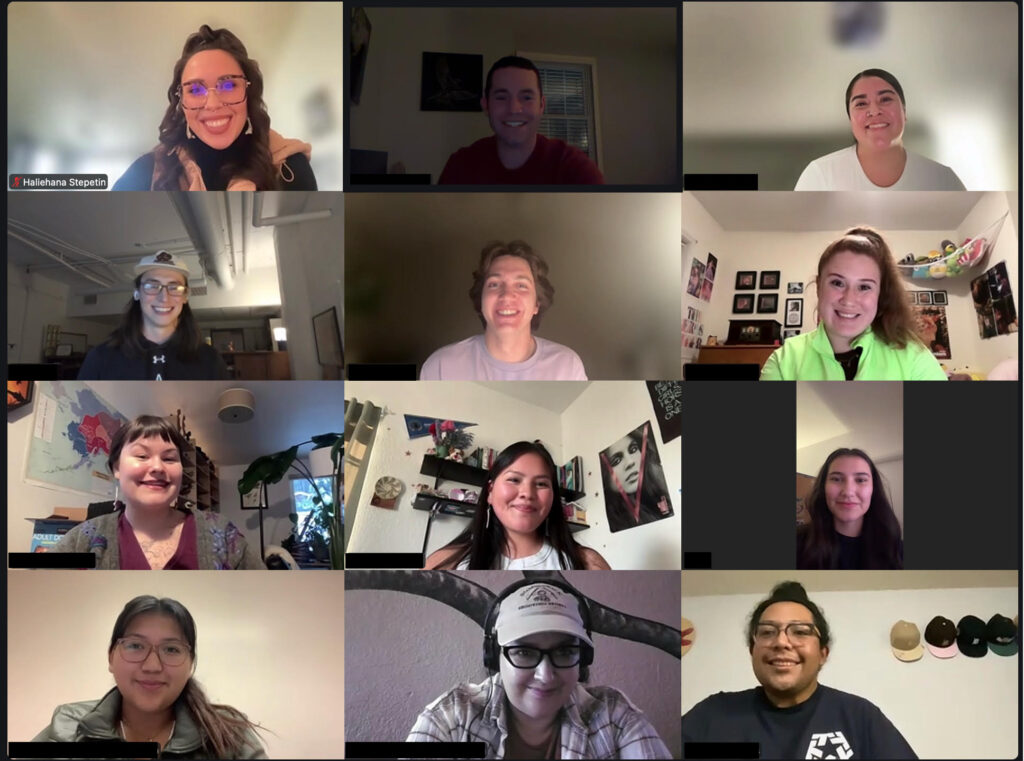
Above: Dr. Haliehana Alaĝum Ayagaa Stepetin (Unangax̂) shares advice about place-centered storytelling with ICP Correspondents and support team members during the 2026 “Indigenous Knowledge and Science Communication” Workshop.